Friday Night Lights and So Much More: How Youth Programs Give Danville Its Soul
You want to understand a town? Watch how it treats its kids on a Friday night.
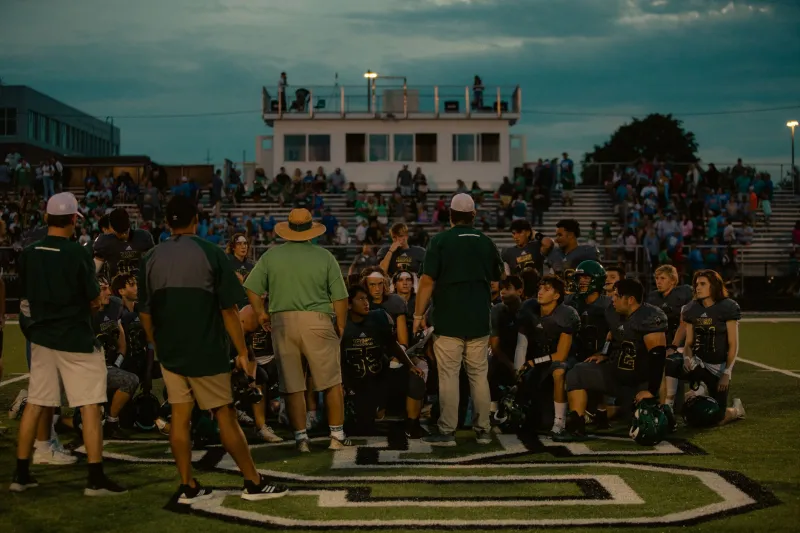
In Danville, that means packing the stands at Admiral Stadium when the Danville Admirals take the field. It means sitting in the bleachers at a middle school basketball game with the same intensity you'd bring to a professional playoff. It means knowing the names of kids on the cross-country team even if you've never had a conversation with their parents. Small-town sports culture gets a lot of eye-rolls from people who grew up somewhere bigger, but in Danville, it functions as something genuinely important: a shared language that crosses every social boundary the community might otherwise have.
And that's just the sports piece. The full picture is considerably richer.
The Admirals and What They Represent
Danville High School's athletic programs carry a weight that goes well beyond wins and losses. The Admirals football program, in particular, has a tradition that longtime residents will talk about with the kind of reverence usually reserved for things much older and more serious. State championships, legendary coaches, players who went on to college programs — the history is real.
But the more interesting story isn't the trophies. It's what game nights do to the community. For a few hours on a Friday in the fall, Danville coalesces around something uncomplicated and shared. The teachers, the business owners, the retired couples, the families who just moved here last year — they're all in the same place, cheering for the same kids. That doesn't sound like much until you live somewhere that doesn't have it.
Basketball holds a similarly central place, which shouldn't surprise anyone familiar with Kentucky's almost religious relationship with the sport. Youth basketball in Danville starts early — rec leagues for kids who are barely old enough to dribble — and the pipeline from those early leagues to high school competition is something the community actively invests in.
Beyond Athletics: The Programs That Don't Get Enough Credit
Here's where the Danville story gets genuinely interesting for anyone thinking about what makes a community good for raising kids.
The performing arts programs at Danville's schools punch well above their weight for a city this size. The high school theater program produces full-scale musicals that draw real audiences and real community investment — not just parents grudgingly fulfilling an obligation, but people who actually want to be there. The technical demands of mounting a full production teach kids things that no classroom lesson quite replicates: deadline pressure, collaboration under stress, the particular confidence that comes from performing in front of a live crowd.
The marching band is another one. If you've ever watched a Kentucky high school marching band at a Friday night game or a fall competition, you know these programs require a level of commitment and coordination that rivals any athletic endeavor. Danville's band program has a following among community members who don't have kids in the program at all — they just appreciate what they're watching.
Community Organizations Filling the Gaps
Not every important youth program in Danville runs through the school system. The community has built a network of organizations that extend opportunities beyond the school day and reach kids who might not connect with traditional athletics or performing arts.
4-H programs in Boyle County have deep roots here, connecting youth to agriculture, science, and civic leadership in ways that feel genuinely relevant to the region's character. The organization's reach into rural families and its emphasis on practical skills gives it a different flavor than urban youth programs, and the annual fair competitions that come out of 4-H work are a real event in the community calendar.
Youth sports leagues operating outside the school structure — recreational soccer, Little League baseball, youth basketball associations — give younger kids and those not yet in high school a place to develop skills and friendships. These leagues depend heavily on volunteer coaches, which means they're also a primary entry point for newer residents to become genuinely embedded in the community. You coach a rec league team for one season and suddenly you know thirty families you didn't know before.
Faith-based youth programs also play a significant role in Danville's landscape. Several of the town's churches run youth groups, summer programs, and community service initiatives that complement what schools and secular organizations provide.
Why This Matters for Families Considering a Move
For parents thinking about relocating to Danville, the youth program ecosystem is one of the most practical and telling things to evaluate. A community that shows up for its kids in consistent, organized ways is a community that has social infrastructure worth trusting.
The specific things worth knowing: Danville's school district has a reputation for genuine community investment that goes beyond test scores and rankings. The size of the schools means kids aren't anonymous — they get known, they get opportunities, they get pushed. A kid who's moderately talented at something in a large suburban district might ride the bench or get cut; in Danville, there's more room to develop.
The volunteer culture surrounding youth programs also tells you something important about the community's character. When a lot of adults are willing to give their evenings and weekends to coach, chaperone, and organize, it reflects a collective sense of responsibility for the next generation that isn't something you can manufacture or fake.
The Intangible Thing
There's something harder to quantify that comes through when you spend time around Danville's youth programs. The kids here seem to know they're part of something. They're not just attending school in a place — they're growing up in a community that's paying attention to them.
That's not universal. Plenty of places have youth sports and school plays and community organizations without generating the same sense of genuine belonging. What Danville seems to have figured out — whether by intention or by the accumulated habits of generations — is that the programs are only as valuable as the community investment surrounding them.
The stands being full on a Friday night isn't incidental. It's the whole point.