Block by Block: The Real Story Behind Danville's Historic Neighborhood Revival
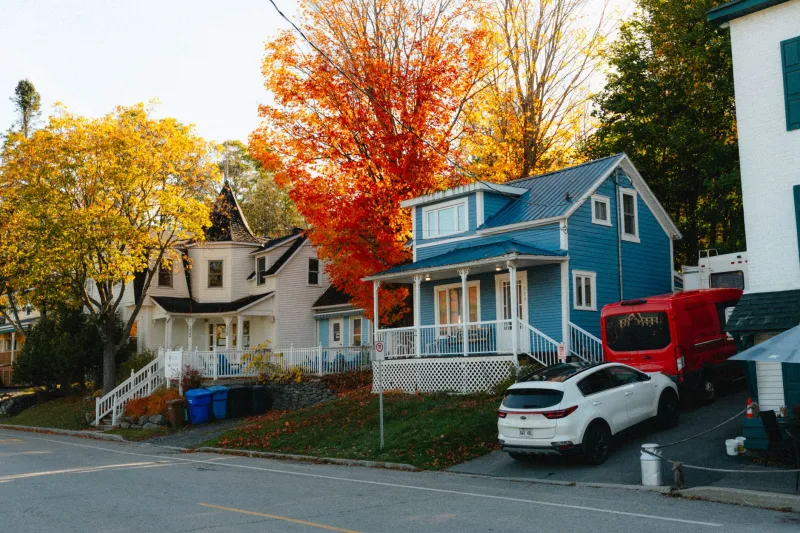
There's a particular kind of house you find in Danville's older neighborhoods — the kind with a wide front porch, original woodwork inside, a roofline that architects stopped designing a hundred years ago, and a price tag that would make anyone from a major metro city do a double take. These houses have been here through everything: the town's industrial years, the lean decades, the slow creep of suburban development that pulled attention away from the center of things.
Now people are coming back to them. And the neighborhoods built around them are starting to feel the difference.
What Makes These Neighborhoods Worth Talking About
Danville's historic residential areas didn't develop by accident. The town grew up around Centre College, a regional economy built on agriculture and light industry, and a civic culture that valued permanence. The architecture reflects that. You'll find late Victorian homes sitting comfortably next to Craftsman bungalows, with the occasional Federal-style house reminding you just how far back the town's roots actually go.
The neighborhoods closest to downtown — particularly the areas radiating out from Main Street and the college campus — contain a remarkable density of pre-World War II housing stock. Some of it has been meticulously maintained. Some of it has been through rougher patches. But even the houses that need work tend to have good bones, which is exactly the phrase you'll hear from the people who've been buying them.
What's changing now isn't just the houses themselves. It's the mix of people in them.
Who's Moving In (and Who Never Left)
Ask around in Danville's older neighborhoods and you'll quickly realize the revitalization story isn't a simple one of outsiders discovering a hidden gem. It's messier and more interesting than that.
Long-term residents — some of them multi-generational families with deep roots in these blocks — have been the quiet backbone of neighborhood stability through the years when things weren't trending upward. They're the ones who kept up their properties, organized informal block watches, and held onto institutional knowledge about what these streets used to be and what they could be again.
Into that foundation, a newer wave of residents has been arriving. Some are remote workers who left larger cities and found that Danville's cost of living made home ownership genuinely achievable. Some are young professionals drawn by Danville's growing small business scene and the quality of life that a walkable, character-rich neighborhood provides. Some are retirees downsizing from larger homes but unwilling to give up proximity to real community.
The dynamic between these groups is, by most accounts, pretty healthy. There's a shared investment in the neighborhood's future that tends to cut across demographic lines.
The Revitalization Efforts Actually Worth Knowing About
Danville hasn't left neighborhood revival entirely to market forces. Several organized efforts are accelerating what's happening on the ground.
The city's participation in preservation-friendly programs has made it easier for property owners to access resources for rehabilitation work. Historic tax credits — available at both the state and federal level for qualifying properties — have provided real financial incentive for owners willing to restore rather than demolish or radically alter historic structures.
Main Street Danville, the organization that coordinates downtown development and promotion, has increasingly connected its work to the surrounding residential neighborhoods, recognizing that a thriving commercial core and healthy surrounding neighborhoods are interdependent. When the downtown is worth walking to, the neighborhoods around it become more desirable. When those neighborhoods are stable and active, downtown businesses have a reliable customer base.
Local contractors and craftspeople who specialize in older homes have seen their workload grow alongside the revival. There's something worth noting in the fact that Danville has retained enough skilled tradespeople — folks who know how to work with plaster, original hardwood floors, and century-old masonry — to actually support the restoration work that's underway.
Specific Areas to Pay Attention To
If you're visiting Danville and want to get a feel for the neighborhood revival firsthand, a few areas are particularly worth exploring.
The streets surrounding Centre College offer some of the most visually striking residential architecture in the city. The college's campus creates an anchor that has historically kept surrounding properties in reasonable shape, and the current moment is seeing genuine investment in the blocks immediately adjacent.
The area along and near Fourth Street captures a more mixed picture — some blocks deep into their renewal, others still in process — that feels honest about where the city actually is rather than presenting a sanitized version of progress.
The corridors connecting downtown to the residential neighborhoods are where you'll see the intersection of commercial and residential revitalization most clearly. New businesses occupying previously vacant storefronts, mixed-use buildings getting new attention, and the kind of street-level activity that signals a neighborhood finding its rhythm.
What This Means for Visitors and Potential Residents
For visitors, Danville's historic neighborhoods offer something that purpose-built tourist districts simply can't replicate: the feeling of a real place where real people actually live. Walking these streets, you're not in a museum or a theme park version of small-town America. You're in the thing itself.
For anyone considering a move, the neighborhoods tell a story about timing. The revitalization is real and accelerating, but it hasn't yet reached the point where prices have caught up with the underlying value. People who've moved here in the last few years will tell you — sometimes with a note of disbelief — what they paid for houses that would command dramatically higher prices in comparable neighborhoods in other cities.
That window doesn't stay open forever. The people who've figured that out are already here, fixing up porches and planting gardens and getting to know their neighbors. The block-by-block transformation of Danville's historic neighborhoods is one of the more compelling stories the city has going right now — and it's still early enough that there's room to be part of it.