Walking Through Time: Danville's Architectural Treasures and the People Saving Them
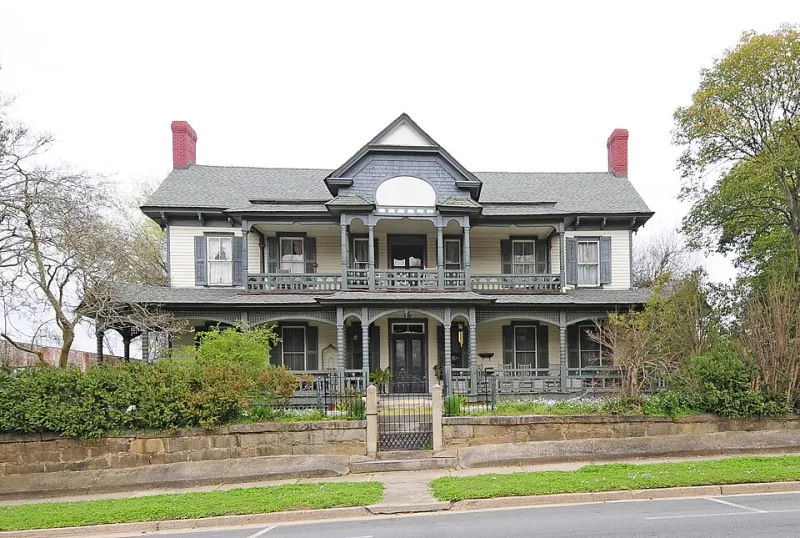
Photo: Bill Fitzpatrick, CC BY-SA 3.0, via Wikimedia Commons
Most people passing through Danville, Kentucky are on their way somewhere else — maybe headed to a distillery tour or cutting through on the way to Lexington. That's their loss, honestly. Because if you slow down and actually look at the buildings lining Main Street, or take a detour through the quieter residential blocks near Constitution Square, you'll find something that bourbon country doesn't always offer: a genuinely layered architectural history that tells the story of a city growing up in real time.
Danville was Kentucky's first incorporated city, and it carries that distinction not just in plaques and museum exhibits, but in the bones of its built environment. You just have to know where to look.
Start Where Kentucky Started: Constitution Square
If there's one place every visitor should see before anything else, it's Constitution Square Historic Site. This isn't a recreation — it's the actual ground where Kentucky's first constitutional conventions were held in the early 1790s. The preserved structures here, including the old courthouse, post office, and meetinghouse, give you a sense of the Federal-style simplicity that defined early American civic architecture.
Federal-style buildings favor symmetry, restrained ornamentation, and a kind of no-nonsense dignity that suited a young republic trying to look serious on the world stage. Walk around the square slowly. Notice how the windows are evenly spaced, how the rooflines are clean and uncluttered. This wasn't accidental — it was a deliberate visual language meant to communicate stability and order at a time when neither was guaranteed on the Kentucky frontier.
Local preservationist Carol Ashby, who has volunteered with the Boyle County preservation commission for over a decade, puts it plainly: "These structures survived because people kept making the decision to care about them. That sounds simple, but it's actually a miracle when you think about how much gets torn down in the name of progress."
The Main Street Corridor: A Victorian Time Capsule
Head north from Constitution Square along Main Street and the architectural timeline jumps forward by about a century. The commercial blocks here are loaded with Italianate and late Victorian storefronts — the kind of buildings that went up when Danville was riding a wave of post-Civil War prosperity and local merchants wanted their buildings to say something about their ambitions.
Look up. That's the first rule of architectural tourism, and it especially applies here. The upper floors of Danville's Main Street buildings are where the decorative work lives — bracketed cornices, arched window hoods, cast-iron facade details that were once the height of fashionable commercial design. At street level, many of these spaces have been updated over the decades, but the upper stories remain largely intact, and they're remarkable.
The Gilcher Building, a standout among the Main Street commercial blocks, dates to the 1880s and features the kind of elaborate brickwork detailing that required skilled craftsmen and real investment. Buildings like this weren't cheap to put up, and they weren't meant to be temporary. They were community statements.
The Residential Streets: Where the Stories Get Personal
If the commercial district is Danville's public face, the residential neighborhoods just off the main drag are where the city's private history lives. Streets like West Walnut and South Fourth Avenue are lined with homes that span Greek Revival cottages from the antebellum period all the way through to Craftsman bungalows from the early twentieth century.
The Greek Revival style hit Kentucky hard in the decades before the Civil War. Columns, pediments, wide porches — it was the architectural equivalent of a confidence statement, and Danville's prosperous merchant and professional class embraced it fully. Several of these homes remain privately owned and occupied today, which means they're not open for tours, but they're absolutely worth admiring from the sidewalk.
The transition to Craftsman-style homes in the early 1900s tells its own story. Where Greek Revival spoke to classical ambitions, the Craftsman bungalow was about practicality, craftsmanship, and a certain democratic sensibility. These homes were designed to be livable, not imposing. Danville's residential streetscapes hold both traditions side by side, which makes for a genuinely interesting walk.
The Preservationists Keeping It All Standing
None of this history survives without active effort. The Danville-Boyle County Historic Preservation Commission works to identify, document, and advocate for the city's most significant structures — a job that requires equal parts historical knowledge, political navigation, and sheer stubbornness.
"The hardest part isn't the big dramatic saves," says longtime preservation advocate Tom Merritt. "It's the slow erosion — a window replaced here, a porch removed there. Each individual change seems minor, but over time you lose the character that makes a building worth caring about."
The National Register of Historic Places listings in Danville — which include Constitution Square and the downtown commercial district — provide some protection and open doors to tax incentives for rehabilitation. But the real preservation work happens at the community level, in conversations between neighbors, property owners, and city planners.
Your Walking Route
Ready to see it for yourself? Here's a loose route that covers the highlights in about two hours at a comfortable pace:
Start at Constitution Square Historic Site on West Broadway. Give yourself at least 30 minutes here — there's a lot to absorb.
Walk east on West Broadway to Main Street, then head north through the commercial district. Take your time on the block between Walnut and Broadway — that's where the Victorian commercial architecture is densest.
Turn west on West Walnut Street and walk two or three blocks into the residential neighborhood. The streetscape here shifts noticeably, and you'll start spotting the Greek Revival and Craftsman homes that define this part of town.
Loop back through South Fourth Avenue heading south, then east back toward Main Street. This route catches several of the most intact antebellum-era homes in the area.
Finish with coffee or lunch on Main Street — you've earned it, and you'll have a whole new appreciation for the building you're sitting in.
Why This Matters Beyond Tourism
Danville's architectural heritage isn't just a draw for history buffs and preservation nerds — though it absolutely is that. It's also a living argument for what makes a place worth caring about. These buildings connect current residents to the people who came before them, and they give visitors something that a brand-new attraction simply can't replicate: a genuine sense of place.
So next time you're rolling through central Kentucky, give yourself permission to slow down. Park the car. Look up. Danville has been here a long time, and it has the buildings to prove it.